


1% For The Planet is a global network on a mission to accelerate smart environmental giving and...
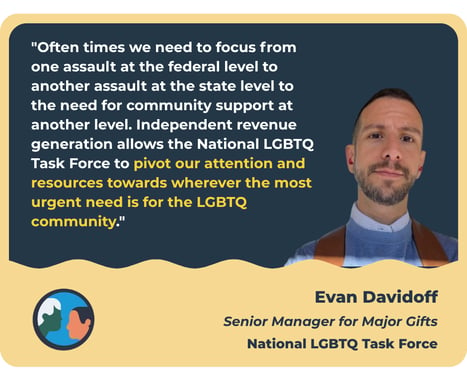
Founded in 1973, the National LGBTQ Task Force has grown to be one of the nation's leading social justice organizations advancing full freedom, justice, and equality for LGBTQ people. The Task Force mobilizes grassroots power to win legal equality, safety, and opportunity for LGBTQ+ communities across America through policy advocacy, community organizing, and direct action campaigns.
Overview
With a grant from Progressive Multiplier, the National LGBTQ Task Force developed a comprehensive digital fundraising initiative to build a sustainable mid-level donor pipeline ($500–$1,499 annual gifts). By designing integrated experiments combining digital advertising, email segmentation, and data infrastructure improvements, the Task Force tested multiple channels and messaging approaches to convert their existing small-dollar donor base into committed mid-level supporters. The project transformed their understanding of donor conversion pathways and revealed critical lessons about platform limitations, data quality, and the power of storytelling in fundraising.
Key Strategies & Tactics
The National LGBTQ Task Force's mid-level donor pipeline initiative consisted of several integrated components designed to move small-dollar donors into higher-value giving:
• Digital Advertising: Testing creative elements on Instagram and META including calls to action, messenger bots, and messaging to grow the membership list and generate small dollar donor leads
• Platform Exploration: Evaluating alternative channels including LinkedIn, YouTube, and X to find the best fit for reaching and converting mid-level donor prospects
• MarTech & Data Audit: Conducting a comprehensive audit of donor data systems — cleaning records and appending email, phone, and cell phone numbers — to build a reliable foundation for digital outreach
• Email Campaign Program: Developing segmented, story-driven email campaigns with varied CTAs and design elements to convert email subscribers into mid-level donors ($500–$1,499)
Lessons Learned
Know Your Platform Landscape
LGBTQ+ organizations face unique platform restrictions — META flagged their ads as political, requiring months of troubleshooting and pivoting before ads could run
Invest in Data Before You Invest in Ads
Clean, complete, and integrated donor data is the foundation of any successful digital fundraising program — not an optional upgrade
Segmentation Drives Results
Tailoring email content to specific audience segments dramatically improves conversion rates and donor engagement
Story-Driven Email Works
Donors respond to narrative — testing stories, CTAs, and design elements in email campaigns led to a 61% increase in conversion and an 18% increase in average gift size
Be Ready to Pivot
When LinkedIn ads didn't convert and META ads were blocked, the team adapted — their willingness to change course preserved the experiment's value
Budget for Infrastructure
Data audits, platform testing, and MarTech improvements take time and money — building these into grant budgets from the start sets programs up for success
The Multiplier Effect
.png?width=960&height=300&name=ROI%20(2).png)
Impact
When META ads were repeatedly flagged as political due to LGBTQ+ content, the Task Force pivoted to focus on what they could control: cleaning their data and optimizing their email program.
The comprehensive MarTech audit revealed critical issues—duplicate records, incomplete contact information, and data integration barriers. By investing three months in data cleanup and appending contact information, Task Force built the foundation for sophisticated audience segmentation and personalized donor communications.
The email program's success—with conversion rates increasing by 61% and average gift sizes growing by 18%—demonstrated that story-driven messaging resonates powerfully with properly segmented audiences. This approach generated immediate revenue and created a sustainable pathway for converting small-dollar donors into mid-level supporters.
The experience also illuminated unique challenges LGBTQ+ organizations face in digital advertising, where platform restrictions can block legitimate advocacy messaging. By exploring alternatives including LinkedIn, X/Twitter, and YouTube, Task Force developed a diversified approach that reduces dependency on any single platform.
.jpg)