
The Organization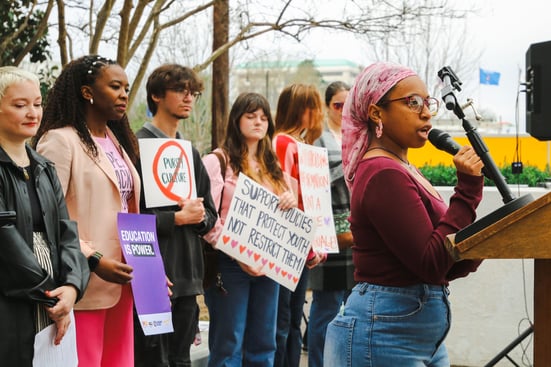
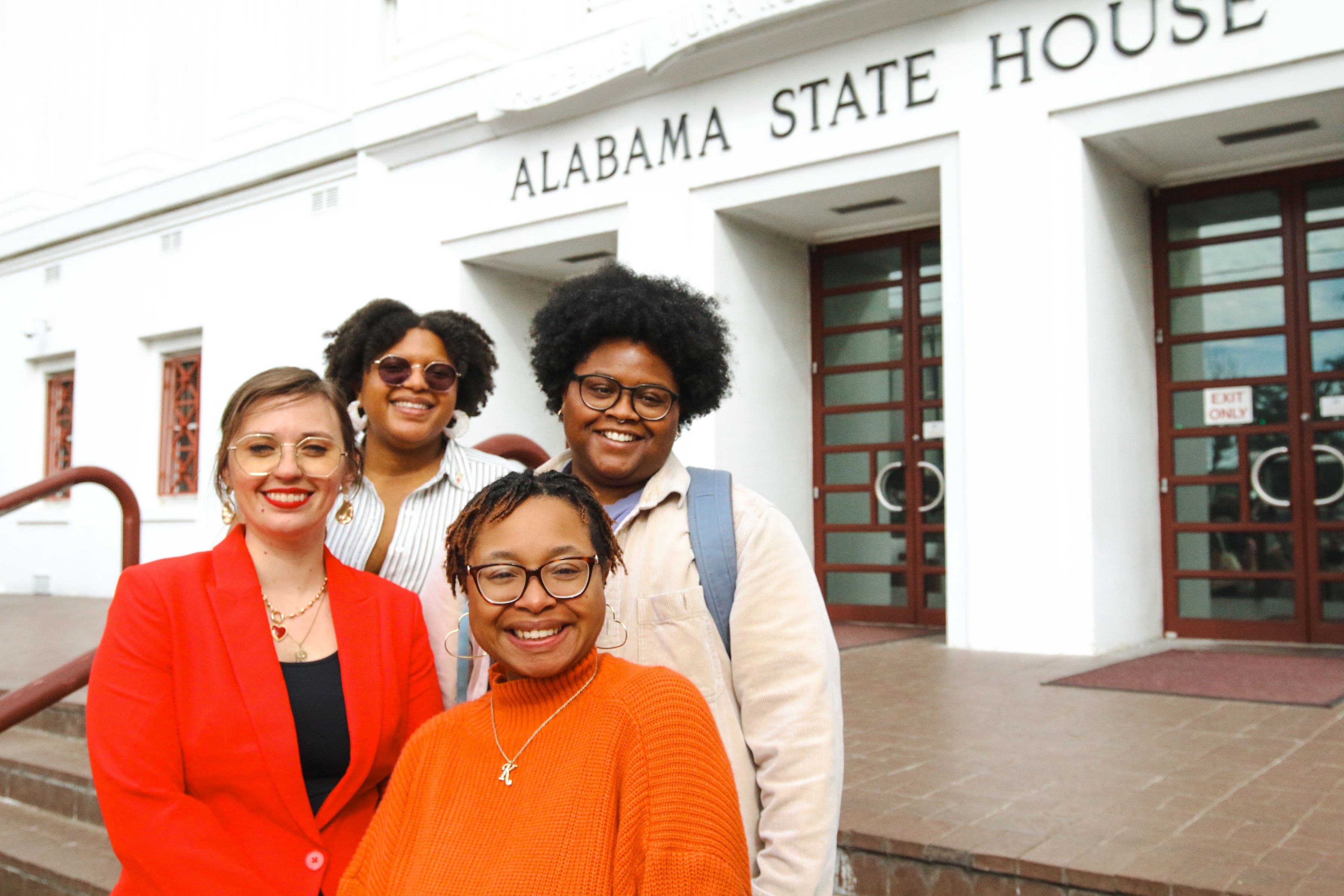
Unite for Reproductive & Gender Equity (URGE) is a national, youth-led reproductive justice organization. Its mission is to build a liberated world where people can live with justice, love freely, express their gender and sexuality, and define and create families of their choosing. URGE is notably the first and only organization exclusively focused on Reproductive Justice from a young people's perspective. It centers the leadership of young people ages 18–30 —particularly those who are Black, Indigenous, or people of color, women, queer, trans, nonbinary, and/or low-income— equipping them with the tools, training, and support to build political power through organizing, voter engagement, and advocacy. Their work spans abortion access, LGBTQIA+ rights, sexual health, gender equity, racial justice, and bodily autonomy, all framed through the lens of self-determination and collective liberation.
Now 34 years old, URGE has a large universe of past staff, members, chapter leaders, and in-state partners who once cared deeply about its mission. With Progressive Multiplier’s (PM) support and a $25,000 grant from the Scherman Foundation, URGE is testing whether that group can be brought back as supporters and donors. Grassroots fundraising is described as "on life support," and staff capacity is limited.
The Goal
URGE believes that people who chose to engage in the past are a "prime target" for re-engagement. The planned sequence is to thank them, update them, invite them to take action, and then ask for a gift. The blueprint sets reference markers for 12/31/26: positive response from at least 30% of the alumni universe, at least $10K raised, at least 250 actions taken, and at least 5 attendees at a July event. At this stage, participation signals matter more than revenue.
Strategies and Tactics in Motion
Since September, URGE has adapted its monthly major-donor newsletter for the alumni email audience, including a call to action in each issue. For the past two months, that call to action has invited alumni to join "Haunted Hotline" text-banking events, putting action before any ask, and participation data flows into EveryAction. After Election Day, staff plan to pull the list of participating alumni and ask them for gifts. There are also several other touchpoints: policy calls to action, a July Maryland event, a fall San Antonio event, and 1:1 follow-up.
Early Learning
- Action-first appears to be a sensible on-ramp, though it is untested. Staff and PM share the view that an action is a natural way to move lapsed supporters along. No alumni conversion data exist yet.
- Reach and alumni engagement may be two different things. One text-banking session contacted about 12,000 voters, but the number of alumni among the participants is not yet known. Early patterns suggest that large outreach totals could overstate alumni involvement unless participation is viewed separately.
- The September newsletter change may have unlocked some movement. Alumni engagement had not gained much traction before that shift. Signals suggest a tailored message with a built-in action may be a better vehicle than earlier efforts. Timing alone cannot establish cause, and the effect on giving is still unseen.
- Peer-led fundraising may be a low-burden complement. A volunteer-organized cabaret raised $1,600 with minimal staff time, which prompted plans for a peer-to-peer toolkit. This hints that volunteer-driven efforts could raise funds without drawing on limited staff capacity.
In-Flight Multiplier Signals
- Investment and revenue: Neither the amount invested nor alumni-specific revenue was reported, so a multiplier ratio cannot yet be estimated. The sources also do not indicate whether future gifts can be attributed to alumni separately from URGE's wider donor base. That attribution may determine how clearly a multiplier effect can be read later.
- Capacity gains: The clearest signals so far concern infrastructure rather than results. Participation data is being captured in EveryAction, which is what makes the planned post-election list pull of participating alumni possible. During the planning stage, URGE envisioned a centralized list and tracking process. If these tools hold, they may be assets that outlast any single campaign.
- Pipeline: The size of the alumni universe is not stated in the sources, so the 30% response marker cannot yet be translated into a number of people. Separately, a contractor is developing a 5-year fundraising plan tied to a Q1 2027 strategic plan. This may offer a route for alumni learnings to inform longer-term fundraising. It is not currently known whether alumni re-engagement will be built into that plan.
What We Are Watching Next
The key question is how many alumni took action and whether they will give when asked after Election Day. Staff will also review CivicShout audience data after the election to see whether sign-ups have donated or taken a second action. URGE plans a lean year-end effort of a few emails and personal outreach to top donors. Capacity is a live constraint: the team plans one combined November–December check-in and expects a digital communications hire in January.
Why This Matters Now
Alumni may be a lower-cost audience than cold acquisition for a team with no acquisition budget. If an action-first approach moves past supporters toward giving, it could offer PM and peers a replicable model. It would also show how a small team can run re-engagement without a large investment.