

The Coalition of Communities of Color (CCC) is a Portland-based nonprofit alliance of culturally...
The Organization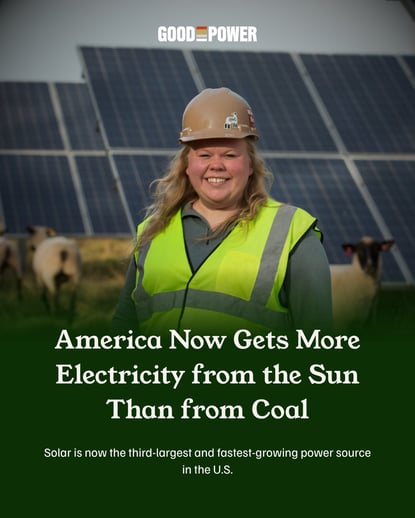
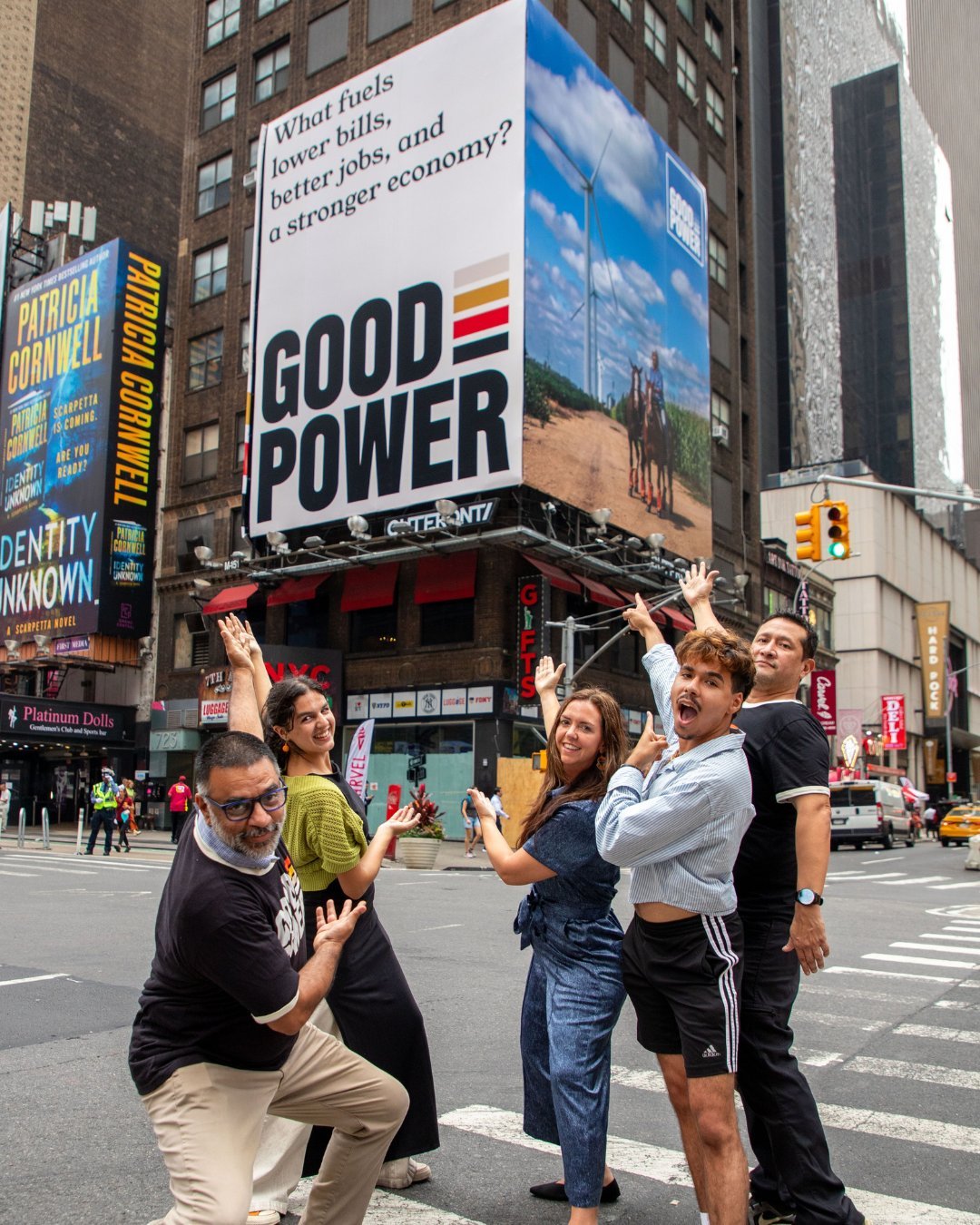
GoodPower Education Fund is a nonprofit that works to accelerate the transition to a decarbonized economy. Through research, strategic communications, and campaigns, GoodPower engages people across the ideological spectrum in building an economy powered by renewable energy and other emerging technologies. Its work includes expanding civic participation, advancing renewable energy, and helping individuals and communities benefit from the clean energy transition.
The Goal
GoodPower is testing whether renewable energy developers will pay for its hyperlocal communications, education, and turnout services, and whether greater brand awareness among developers is what moves them from interest to paid work. The working hypothesis is that visibility through LinkedIn and industry conferences will land more meetings and convert them into paying partners. Developer-paid engagements could diversify revenue and let GoodPower report local wins back to institutional funders.
To learn what works, GoodPower is running a three-year, $100K grant, funded at $33K per year, aimed at building 5–10 new developer relationships. The design pairs a two-month LinkedIn lead-generation campaign, integrated with Salesforce follow-up, with conference speaking and attendance, direct outreach, and a prospect map of about 20 targets. These are supported by a menu of services, statement of work templates, and a clearer value proposition.
Strategies & Tactics in Motion
The experiment is currently focused on building the groundwork for developer outreach and testing two main channels for reaching prospects. The foundation is in place: a menu of services, statement of work templates, and a renewables slide deck are complete. On LinkedIn, the campaign is live with two ad videos targeting developers. Results are expected biweekly, but none are available yet. At conferences, the CEO spoke at American Clean Power (ACP) in March 2026, and staff held one-on-one follow-ups afterward. Relational, one-on-one email outreach to developers also continues, though its deadline moved to September 26 after delayed grant disbursement.
Early Learning
- Interest and visibility are building. GoodPower was far more recognized at ACP than the prior year. A New York wind-focused trade association has expressed interest in GoodPower’s work.
- There is no standard pricing, and leadership resists fee increases. Staff are still defining the value proposition against free alternatives.
- Developer conversations keep surfacing three themes that were not part of the original design. GoodPower is still learning how to respond to each:
- Data-center opposition spilling over onto renewables. Communities turning out against data centers are beginning to oppose energy development more broadly. They lump renewable projects in with data centers even though the two are quite different. Developers describe this as a major emerging challenge.
- Bot-driven comments. Developers are encountering fake, bot-generated opposition that makes it harder to control public comment and tell real residents from automated voices. This matters to GoodPower's work because local decisions turn on who shows up and what is submitted. GoodPower is developing True Voice, an AI tool meant to separate bot comments from human ones. Developers and partners are beginning to show interest in True Voice, but the tool remains in beta or pilot mode and needs more funding to deploy.
- Demand for battery-storage education. Developers and communities appear to need more awareness and education about battery storage. GoodPower is responding by conducting research studies and developing more video content. The demand may signal that storage is a distinct educational need, separate from turnout and opposition response, and potentially a service line developers would value. Whether it becomes paid work is still an open question. September's ACP battery-storage conference may offer more insight.
In-Flight Multiplier Signals
- Invested: $33K per year. Only year one is confirmed, and years two and three are pending.
- Leading indicators:
- 422 items submitted since May;
- Campaigns active in seven states;
- Five "proving ground" counties live. 'Proving ground' refers to active campaigns inoculating target communities with pro-clean-energy content to build local support ahead of project approvals.
- A proposal to a New York trade association is also pending.
What We're Watching Next
The central question is whether LinkedIn drives meetings and conversions. The planned comparison is about 20 meetings from convenings versus about 10 from a two-month LinkedIn run. A second question is whether GoodPower can diversify beyond its two lead developers, and intentional outreach is planned for August to test this. The team is also waiting to see whether the pending New York proposal converts.
Upcoming learning moments include September's ACP battery-storage conference and the December, March, and June reflections, which should show what is and is not working. Decisions to pivot, scale, or pause will depend on end-of-year metrics that are still being defined, and on whether years two and three of funding are confirmed.
Why This Matters Now
A high-stakes local problem. Clean energy projects often stall at local decision points, where outcomes turn on who shows up and what is submitted. Developers say turnout and public comment are their biggest obstacle, and their own outreach is not enough to secure approval. Misinformation raises the stakes: in Ohio, a utility commission rejected a project after AI-generated bot comments were mistaken for real residents.
A timely window to test. Federal and state action is largely blocked, which makes local bodies the main route for advancing renewables. Some developers are also racing to finish projects before key legislation changes take effect at year-end. GoodPower's renewables program is only two years old, yet its visibility at ACP grew markedly in a year. This may be a useful moment to learn whether that visibility can become paid relationships.
A funding gap that shapes the question. Developer revenue is not expected to dent GoodPower's roughly 90% institutional share, only diversify it. Earned revenue was roughly $100–150K against a roughly $23M budget. Developers pay roughly $5–25K per project, while finishing tools like True Voice may require millions. Understanding what developers will pay for, and how to reach them efficiently, is a practical question for the organization's financial resilience.
What it may unlock. The experiment feeds Progressive Multiplier's learning agenda on standard revenue-generating experiments. PM describes lead conversion as "bread and butter" work whose lessons may serve as a template for other revenue experiments. Early signals also point to a broader question: how to move from one-off campaigns toward multi-project portfolio agreements that make deployment repeatable. With each funding year treated as its own experiment, learning early helps inform decisions about what to continue.