
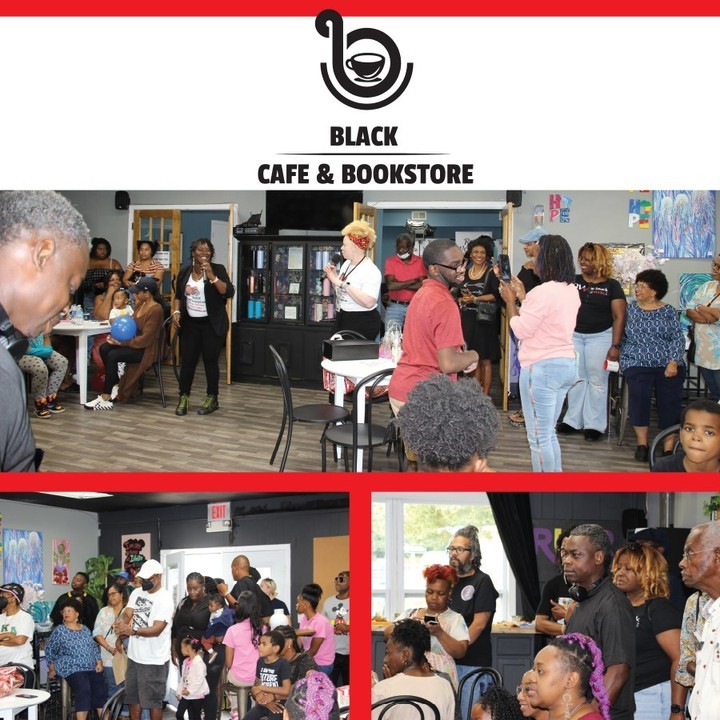

Since opening its doors in November 2022, the Black Cafe & Bookstore in Pensacola, Florida has...
Equality Federation is a national social justice organization focused on advancing equality for LGBTQ+ people by strengthening and supporting state-based advocacy groups across the US. It serves as a movement builder and strategic partner, helping these organizations develop leadership, build capacity, and drive policy change at the state level. Equality Federation accelerates advocacy, builds grassroots power, and creates lasting systemic change so that LGBTQ+ individuals can live freely and equally in their communities.
Overview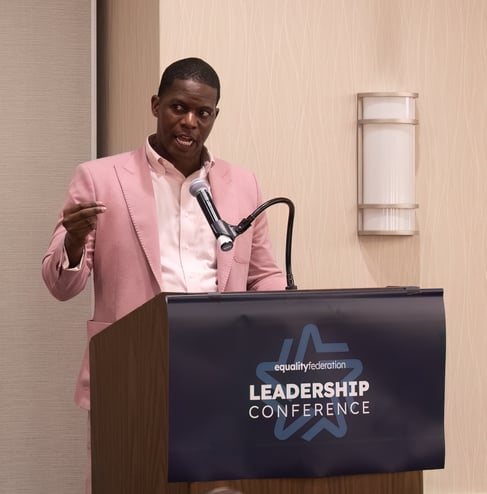
Equality Federation serves as the strategic backbone for a network of 48 state-based organizations championing LGBTQ+ rights across the country. But like many movement organizations, they faced a critical challenge: their reliance on grants and corporate funding limited their financial independence and ability to respond quickly to emerging threats—like the more than 300 anti-LGBTQ+ bills introduced across the country in recent years.
With no dedicated team focused on individual giving and a grassroots donor base of just 721 supporters, Equality Federation recognized they needed to build authentic relationships with individual donors who could sustain their work for the long haul. Through a grant from Progressive Multiplier, they set out to test their way to a stronger grassroots fundraising program—aiming to increase their donor count from 721 to 7,000 and raise $85,000 over three years, with a projected ROI of 2.4:1.
Key Strategies & Tactics
Equality Federation launched a comprehensive testing approach built on three integrated strategies:
Digital Advertising with Feathr: They partnered with Feathr to run targeted digital ads on Facebook and Instagram, including retargeting campaigns. The ads aimed to reach progressive individuals in their late 30s to 40s in major urban areas like New York City, Washington DC, and San Francisco. They tested different messaging across their program areas—from HIV advocacy to transgender rights—to grow their email list and convert new supporters into donors. They even geofenced 10 pride events nationally to expand their reach, something impossible for their 17-person team to do manually.
A Renewed Email Program: They revitalized their email strategy, moving from sporadic, ad-hoc sends to intentional campaigns that tested everything from email length to graphic styles to sender names. They sent more than 40 emails during the project period, segmenting their audience into current donors, lapsed donors (those who gave last year but not this), and prospects who had never donated. Each segment received tailored messaging designed to meet them where they were in their relationship with the organization.
Leveraging and Updating Existing Assets: They worked to optimize their website and donation forms to improve user experience and conversion pathways. They created dedicated landing pages for campaigns, developed welcome series for new subscribers, and tested petition campaigns versus direct donation asks—discovering that petitions generated significantly more engagement, with one White House petition alone capturing over 600 new email addresses.
Lessons Learned
Through rigorous testing, Equality Federation uncovered valuable insights that will shape their fundraising for years to come:
Email Testing Revealed Clear Preferences: After sending 40+ emails with extensive A/B testing, they discovered that shorter emails significantly outperformed longer, detailed ones. "Shiny" visuals—polished, eye-catching graphics—drove more engagement than simple designs. Perhaps most surprisingly, any personal sender name worked better than their organizational identifier "EQFed," helping create more authentic connections with supporters. Their HIV advocacy content showed the highest engagement from lapsed donors, while monthly donor campaigns performed best with current supporters.
Digital Ads Faced Significant Obstacles: LGBTQ+ content was repeatedly flagged as political on advertising platforms, even for their 501(c)(3) work, causing substantial delays. The Feathr platform itself created additional technical challenges—initial creative quality was poor, ad sizing errors caused improper serving, and ads didn't launch properly until April, functioning fully only in the final 2.5 months of the grant period. The team learned to purposefully overestimate timelines, now building in three times the expected turnaround time.
Strong Engagement, Poor Conversion: When ads finally ran, they achieved click-through rates that beat industry averages—people were interested and engaged. But conversion rates remained consistently low across all channels, with only two donors converting from the ad campaigns. Despite high engagement with emails and ads, something wasn't working at the final step.
The Real Bottleneck Emerged: After two years of testing across emails, ads, and landing pages, the team identified where the real friction lay: their donation forms. "We learned that it wasn't our messaging," explained Mario Guevara, who leads their donor relations work. "The writing quality wasn't the problem. People were interested and engaged. But when they got to our donation form, something wasn't working." Their website, originally designed for state and national partners rather than general supporters, needed significant reformatting. Their CRM and donation platform had limitations that required investment beyond the grant scope.
The Multiplier Effect
.png?width=1920&height=600&name=ROI%20(6).png)
Impact
While the immediate financial returns didn't match their ambitious initial projections, Equality Federation built something more valuable: a foundation for sustainable grassroots fundraising grounded in real data about their supporters and a clear understanding of what needs to change.
Most importantly, their rigorous testing approach led them to identify the donation form itself as the primary friction point in their conversion funnel. This insight has proven invaluable. Despite strong engagement metrics—people opening emails, clicking through ads, and visiting their website—the conversion rates remained consistently low across all channels. The problem wasn't their messaging or their audience targeting. The bottleneck was the technology itself.
Armed with this knowledge, the organization is now investing in technology improvements, particularly redesigning their donation forms and website experience for general supporters rather than just their state and national partners. They're developing more nuanced messaging strategies and building the infrastructure for sustainable donor relationships. They've moved from sporadic email sends to strategic, segmented campaigns. They've launched quarterly newsletters to stay connected with their full database of 18,000+ people. They've created the capacity for monthly giving campaigns that were previously impossible.
"This journey has transformed how we think about fundraising," says Skye Maresca, their Data Manager. "It's not just about raising money; it's about building authentic relationships with our supporters."
By embracing a learning mindset and identifying the true barrier to conversion, Equality Federation is positioning itself to unlock much greater success going forward. Once they address the donation form friction that their testing revealed, all the engagement they're already generating—the email opens, the ad clicks, the website visits—can finally convert at the rates their strong messaging deserves. They're not just building a donor base; they're building the foundation for long-term financial sustainability that will allow them to continue accelerating advocacy for LGBTQ+ equality, no matter what challenges lie ahead.