
.jpg?width=419&height=279&name=images%20(4).jpg)


Founded in 2019 by Stacey Abrams and anchored in Georgia, Fair Count works to build long-term power...
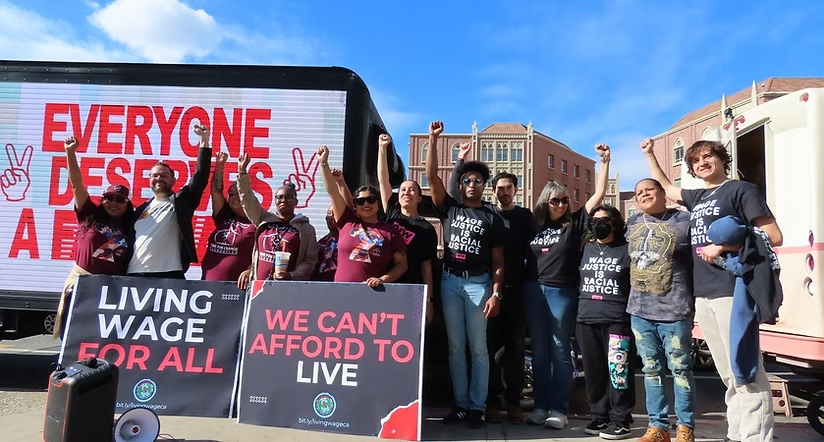
Founded by workers and advocates committed to ending subminimum wages, One Fair Wage has grown to be one of the nation's leading voices fighting for fair wages and safe working conditions for food service workers across the United States. One Fair Wage builds independent economic power with their base of restaurant workers and independent restaurant owners, with plans to continue their growth.
Overview
With a grant from Progressive Multiplier's RAISE program, One Fair Wage developed Just.Safe.Food.—an accredited food safety certification program that provides an ethical alternative to industry-standard training while generating sustainable revenue.
By designing a comprehensive approach that included curriculum development, accreditation, and multi-channel marketing, One Fair Wage built a foundation for financial independence while strengthening their movement-building capacity. The project transformed their approach to worker education and created pathways for deeper economic empowerment.
Key Strategies & Tactics
- Curriculum Development: Working with public health experts and worker advocates, they created a 15-section course covering foundational food safety knowledge, contamination prevention techniques, emergency response protocols, and—critically—workers' rights and legal assistance. The training takes approximately 1.5 hours to complete and includes a 40-question assessment.
- Competitive Pricing: At $5 per user, Just.Safe.Food. undercuts competitors like ServSafe ($15) while remaining financially sustainable. This pricing makes the training accessible to workers while generating revenue for One Fair Wage's advocacy work.
- Accreditation Process: The team navigated the complex ANSI (American National Standards Institute) accreditation process, submitting multiple versions of their curriculum to meet industry standards. Though this took longer than anticipated, accreditation was achieved in March 2024.
- Multi-State Strategy: Rather than attempting a nationwide launch, One Fair Wage focused initially on California, where they had strong networks and high demand. They then identified Illinois as their second market, planning to expand to 11 states and 100 counties over five years.
- Network Leverage: The program tapped into existing relationships through One Fair Wage's network of nearly 300,000 service workers and over 2,000 restaurant employers in their High Road Restaurants program, creating built-in marketing channels and early adopters.
Lessons Learned
-
Anticipate Regulatory Hurdles
The accreditation process was more complex and time-consuming than expected, requiring flexibility in project timelines
-
Leverage Organizational Strengths
OFW's expertise in curriculum development and knowledge of food safety regulations were crucial assets in creating comprehensive training
-
Build Specialized Expertise
Having staff with experience in accreditation processes was instrumental in navigating requirements and ensuring compliance
-
Engage Target Audiences Early
Collaborating with restaurant workers and owners provided valuable insights that shaped curriculum development
-
Develop Robust Marketing Infrastructure
Allocating sufficient resources for consistent promotion and audience engagement is essential for reaching enrollment targets
-
Create Contingency Plans
Building flexibility into project plans helps mitigate the impact of delays in accreditation and other unforeseen challenges
Impact
Through this experiment, One Fair Wage was able to create an ethical alternative to ServSafe—the dominant food safety certification operated by the National Restaurant Association, which uses training revenue to fund lobbying against worker protections. Their curriculum strategy, which incorporated workers' rights education alongside traditional food safety content, resonated deeply with both workers and independent restaurant owners committed to high-road employment practices.
This approach not only generates sustainable revenue but enhances their capacity to advocate for fair wages and safe working conditions. The program strengthens community connections by offering all training graduates the opportunity to join the Food Service Worker Co-op ownership, creating pathways to build equity and participate in governance.
Originally motivated by the recognition that workers were being required to fund their own opposition through mandatory ServSafe training, the Just.Safe.Food. program demonstrates how advocacy organizations can leverage their expertise to create educational offerings that both advance their mission and generate sustainable income. The initiative directly supports their advocacy work by creating unrestricted revenue streams while building a pipeline of informed worker-advocates who understand both food safety and their workplace rights.