
The Organization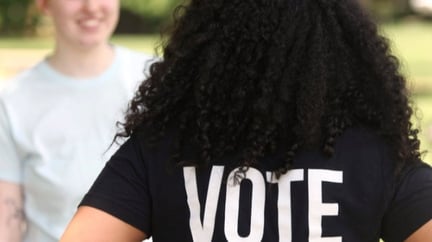
State Voices Florida is a nonprofit organization fiscally sponsored by the Tides Center that engages historically underrepresented and marginalized communities—including BIPOC individuals, low-income residents, youth, and women—in Florida’s democratic process. SVF coordinates a network of 130+ social justice partners across 67 counties. It provides partner organizations with access to the Voter Activation Network (VAN), which is a powerful data platform used to manage civic engagement, voter registration, and turnout campaigns. Free VAN access is valued at $40,000 per organization, with SVF also providing a range of capacity-building and support services to its network, such as training programs, compliance and legal support, and coalition and workspace support, all without fees.
The Goal
The experiment tests whether corporate and law-firm sponsorships of convenings and programs can diversify revenue for an organization whose funding comes mostly from grants. Its development department is one person, with no prospecting tools, CRM, or marketing budget. Discussions suggest that sponsors will pay for visibility within SVF’s network of partner organizations. SVF’s goal is to raise $100,000 over three years, including $33,000 by February 2027. Early indicators include sponsor materials completed, prospects identified, asks made, and sponsors secured.
Strategies & Tactics in Motion
The experiment is currently focused on building sponsorship infrastructure. Sponsor one-pagers have been completed, and a prospect list is in progress. Sponsorship ideas under discussion include breakfast, lunch, and dinner sponsors, sponsored happy hours, local small-dollar sponsors, and a named or sponsored fellowship program. The team has also adapted its approach. Merchandise was ruled out for lack of brand recognition, and earlier ideas such as soapbox socials and a funder fair were set aside in favor of sponsorships.
Early Learnings
- Convenings were historically self-funded, and sponsors had not been considered.
- Prospecting remains manual, since tools are costly and AI results are unreliable. Corporate partners also require values vetting.
- Donations route through a Tides Center dropdown menu with a list of organizations, which risks misdirected gifts and complicates any marketing push.
In-Flight Multiplier Signals
- Capacity gains: Sponsor one-pagers are complete. The one-pagers are the first step in the sponsorship process, and they give SVF’s development staff something concrete to put in front of prospects. Free venues, including a progressive church in Tampa and an education union hall in Tallahassee, offset the cost of hotel ballrooms for gatherings of roughly 150 people. Lower convening costs support SVF’s aim of using sponsorship revenue to help cover convenings.
- Pipeline: Corporate applications (NBA, Ben & Jerry's, Patagonia) are pending. The prospect lists are built and cover attorneys across Florida and progressive bar associations, which fits the pitch to law firms that a sponsor gains visibility with SVF’s 130+ partner organizations. The September 29 Orlando convening will be the first test of whether this pipeline converts.
- Gaps: CRM organization, a welcome series, and a stewardship plan have not yet been addressed. The development department currently has no CRM and tracks work in spreadsheets and a calendar. If sponsors do commit, stewardship capacity in a one-person department is the likeliest constraint.
What We're Watching Next
The most immediate question is whether asks turn into sponsors. The tentative September 29 Orlando convening is the first real opportunity to test breakfast, lunch, dinner, or happy-hour sponsorships. We will watch which sponsor types respond, whether the pitch of visibility with SVF’s 130+ partner organizations resonates with law firms, and whether prospects clear the values vetting applied to corporate partners.
A second set of questions concerns internal buy-in and capacity. The development staff expects the executive director to support the effort once she can show a plan and already-secured sponsors, so early commitments may determine how much staff time the work can claim. Whether one person can handle prospecting, outreach, and follow-through remains open. Options raised include a prospecting tool, a consultant with corporate or major-gift experience, or support for time-consuming tasks, but no decision has been made yet. The Tides donation page also remains a barrier to any marketing push. Lastly, the next convening, expected around the 2027 legislative session in Tallahassee or Jacksonville, will show whether September's results carry over to a more policy-focused audience.
Why This Matters Now
State tables and other intermediaries often struggle to fund infrastructure work. SVF revenue is primarily foundation-based, with a few large individual donors cultivated by the executive director and no small-donor or monthly-giving program. The development department submits two to three grant applications a week, and members of SVF’s partner network compete for the same funders. SVF also reported that some national donors treat Florida as a lost cause and described the grant pool as both crowded and shrinking. A sponsorship line is one of the few institutional options that is not another grant application, and a fully grant-dependent structure leaves little room to absorb a funder's departure.
The capacity to test this is thin. The development department is one person, the first dedicated development role, who also trains partners and builds the department's infrastructure from scratch. She has no CRM, prospecting software, or marketing budget, builds her own materials in Canva, and finds the available tools too expensive. The case is also hard to make; infrastructure work is hard to "sell" to funders, and prospective funders ask who SVF is when they cannot see the coordination, compliance, and data support that lets 130+ partners operate.
Florida's political and civic environment sharpens both the need and the risk. Funders increasingly expect visibility, yet the organization has long stayed behind the scenes to protect partners, and security shapes how it plans public events and marketing. Convening sponsorship may offer a middle path: sponsors buy visibility with a trusted partner network without the organization taking on broad public exposure. These convenings will show whether it can convert, and the result will feed Progressive Multiplier's learning agenda on whether sponsorship works for behind-the-scenes organizations.