

Founded in 2015 by a group of dedicated local organizers, Engage Miami Civic Foundation has grown...
The Organization
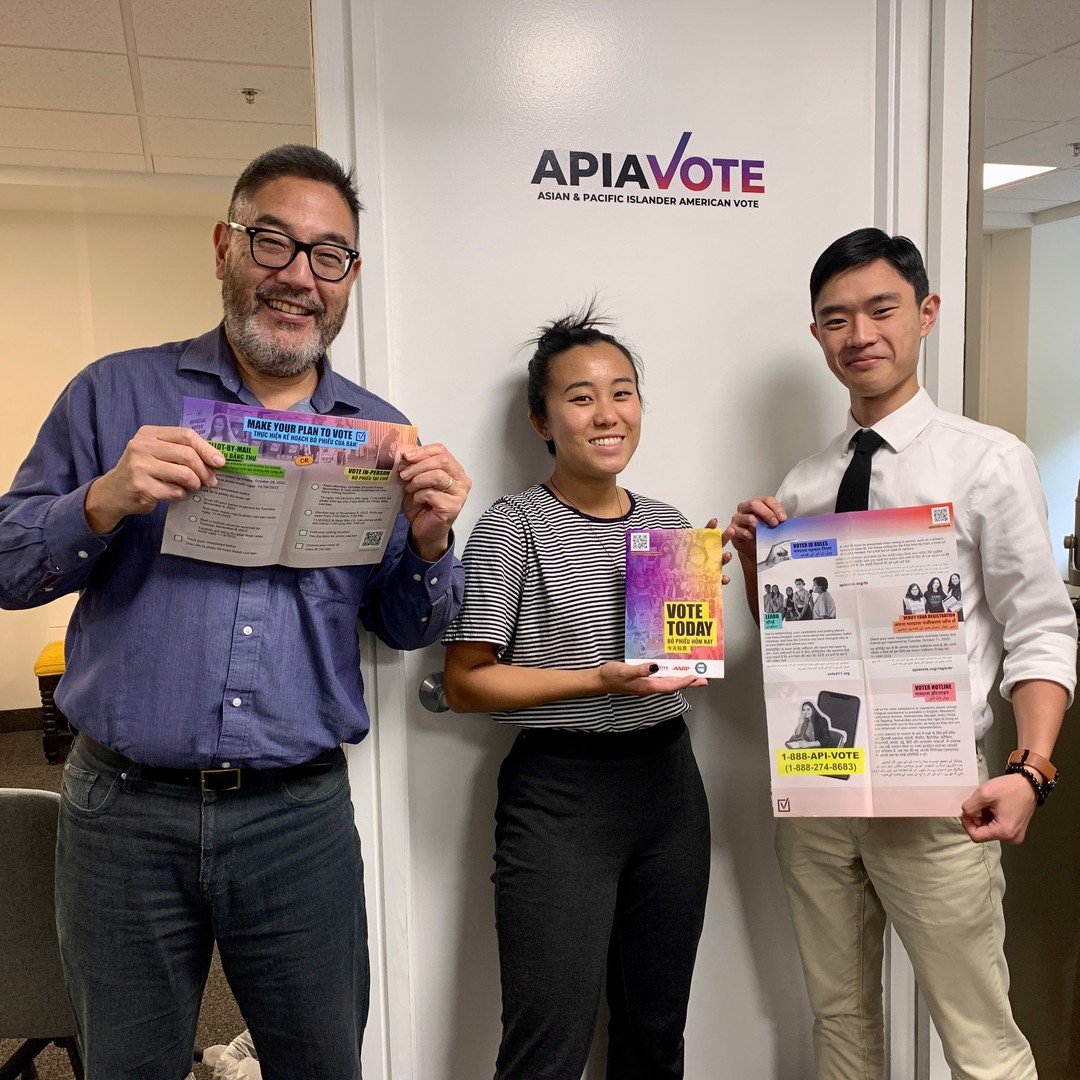
Asian & Pacific Islander American (APIA) Vote is the nation's leading nonpartisan nonprofit dedicated to engaging, educating, and empowering Asian American and Pacific Islander (AAPI) communities to build a sustained culture of civic participation. Founded in 1996, the organization works to register and mobilize AAPI voters, support trusted local community organizations with funding and resources, conduct research to strengthen AAPI political representation, and cultivate the next generation of AAPI civic leaders. At its core, APIAVote works to ensure that AAPI communities are represented and heard in American democracy.
The Goal
APIAVote is testing whether dedicated major gifts capacity, a consultant and a dedicated staffer, can convert warm relationships with Asian American high-net-worth prospects into gifts. The 2026 target is $3M in major gifts and feasibility for a possible $60M five-year campaign. The second track builds an annual fund baseline of welcome series, consistent email and tracked metrics, with a goal of matching last year's total or growing about 5%.
Strategies and Tactics in Motion
On major gifts, APIAVote has onboarded the former executive director of Donors of Color as a consultant. She is building the infrastructure: wealth screening, FEC filing review, a base deck for high-net-worth prospects, and a tracker segmented by individuals, foundations, and corporate allies. The founder's two-week California test tour produced about 40 conversations, most with actionable follow-up, and first-round proposals went out this spring. A June Jeffersonian dinner drew 11 attendees. Mid-August and fall briefings, timed to the Asian American voter survey release, and a September mahjong friend-raiser are planned.
The annual fund track is focused on list health and consistency. The newsletter moved from weekly to bi-weekly. A list-validation contract is signed for roughly 18,000 active and 80,000+ dormant contacts. The dormant group is not being emailed in bulk, to protect sender reputation. Consumer data is being appended in NationBuilder to enable segmentation. Major-donor prospects are flagged so they stay out of mass appeals but still receive the newsletter. A welcome series is designed for A/B testing, with cohorts compared on retention, actions, and gifts after three months. This fall, the team is drafting a major-donor stewardship series leading into the October 1 Get Out The Vote (GOTV) sprint. It is also planning a small-dollar appeal tied to the 1.1 million-household mail and phone program (for example, "$250 = 5,000 calls") and a year-end sprint. Year-end sends would go every other day, December 26–31, when about 25% of annual giving typically arrives.
Early Learning
- The value of narrowing scope:
- The $33,333 grant from Vote Your Voice narrowed from three tactics to two, with major gifts folded into one tactic and small-dollar giving as the second.
- List acquisition was deferred to a later phase because the team is not yet ready for the compliance and strategy work involved, and PM coaching cautioned against spending on acquisition before retention is measured.
- A May Heritage Month campaign was dropped after a weak kickoff.
- Asks are now tied to specific program outputs and made before the funded activity occurs.
- Major gifts momentum: Prospects arrive with strong emotional urgency, and the consultant's network is opening doors. The Jeffersonian dinner drew 11 attendees, one negative response, and one warm contact who may yield a proposal.
- Small-dollar signals: Pairing the Asian American voter-survey release with an ask drew an immediate $100 gift. Staff also responded well to tying asks to program output.
- Capacity challenges: The communications director's departure left the frontline major gifts officer to also oversee communications and development. APIA Vote has only one development staffer, and no annual fund plan existed.
- Policy to watch: Starting in tax year 2026, standard-deduction filers can deduct up to $1,000 in charitable gifts ($2,000 for joint filers) on top of the standard deduction. This could support upgrade asks to mid-level donors, for example from $500 to $1,000. Any donor messaging awaits legal review, since the team cannot offer tax advice.
In-Flight Multiplier Signals
- Invested: The Vote Your Voice grant covers the consultant's contract and about $4K for data cleanup.
- Revenue to date: No experiment-attributed revenue has been reported. The first small-dollar signals are two social-media donors from minimal-effort outreach and an immediate $100 gift after pairing the voter survey release with an ask. Organization-wide, $2.5M of a $5.5M fiscal-year goal was secured as of June.
- Pipeline momentum: California outreach identified roughly 150 prospects. By June, about 30 high-net-worth Asian American prospects were qualified and actively engaged, and roughly half were strategized and in negotiation. First-round proposals went out this spring. Next up are a roughly 75-person personalized year-end mailing and renewal outreach to lapsed donors giving $100–$10,000.
- Capacity gains: A major gifts tracker of about 1,300 names, wealth screening, a base deck, and a development operations manager fully dedicated to major gifts.
What We Are Watching Next
Key questions include whether prospect conversations convert to commitments and whether the consultant meets her metrics. Another is whether the $60M campaign proves feasible by year-end. Near-term milestones are the year-end sprint, the December Taste of Democracy kickoff, and a possible 2027 gala. A February 2027 review will decide whether to adjust or continue. If the consultant hits her targets, funds could shift toward small-dollar giving. Staff capacity is also an open question.
Why This Matters Now
The civic stakes are high. APIAVote builds civic power for what it calls the fastest-growing U.S. electorate, moving AAPIs "from invisible to indispensable" as elections are won by slimmer margins. This is a midterm year, and APIAVote's GOTV sprint and 1.1 million-household mail and phone program are under way.
The funding base is fragile. Only 34¢ of every $100 donated reaches AAPI-led organizations, up from 32¢ five years ago. Foundations supply about 60% of APIAVote's revenue. The path of several foundations is unclear, and the anti-DEI climate has hurt corporate giving. A critical funder for APIAVote, a foundation providing approximately $8M a year for 15 years, has spent down, leaving a roughly $8M ecosystem gap.
The timing is unusually consequential. Revenue grew from about $3M to $8M over four years, yet individual giving was never built. Wealthy Asian American prospects are motivated by current events but give mostly to universities and the arts. They often see philanthropy as notoriety rather than a way to build political power, and they ask why they haven't funded APIAVote since 2007. The electoral calendar also narrows the C3 giving window before donors shift to C4s and campaigns. A possible 2027 20th-anniversary gala could launch a larger campaign, and the February 2027 review will decide next steps.
This experiment offers an early look at how a small, foundation-reliant organization can build individual giving without overextending staff. It also shows how PM coaching can help translate email and stewardship practice into a sustainable annual fund. These are learnings Progressive Multiplier can share across its portfolio.