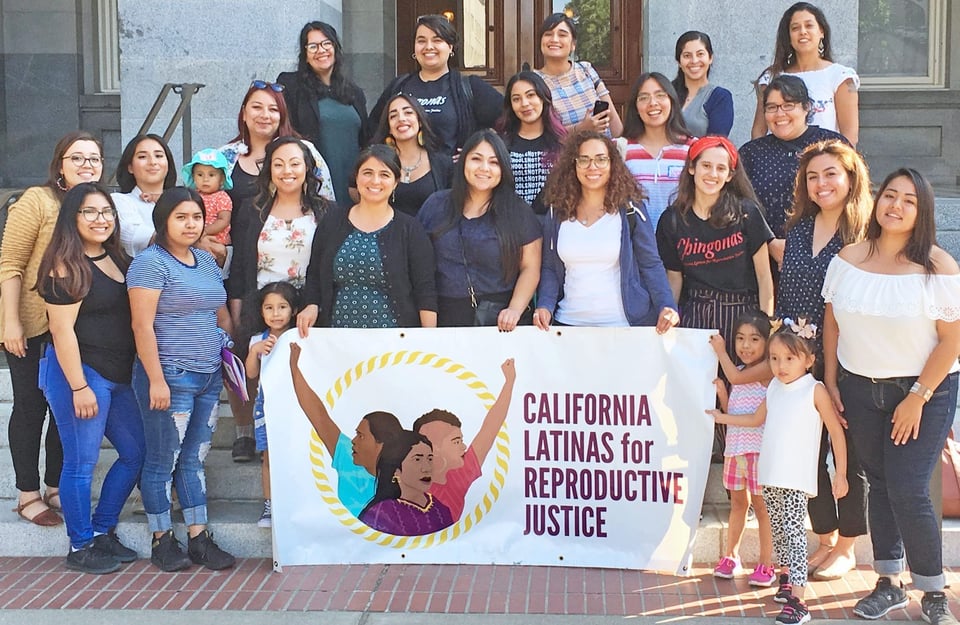

Founded in 2003, California Latinas for Reproductive Justice (CLRJ) is a statewide organization committed to honoring the experiences of Latinas/xs to uphold dignity, bodies, sexuality, and families. CLRJ builds Latinas'/xs' power and cultivates leadership through community education, policy advocacy, and community-informed research to achieve reproductive justice across California.

Overview
With a grant from Progressive Multiplier, CLRJ developed a fee-for-service Restorative Justice (RJ) training program to generate independent revenue while expanding their educational impact.
By systematizing an approach that had previously been reactive and ad-hoc, CLRJ built a foundation for financial independence while strengthening their capacity to share their expertise with partner organizations, universities, and government agencies. The project transformed their approach to earned revenue and created pathways for sustainable growth beyond traditional foundation funding.
Key Strategies & Tactics
CLRJ's training initiative consisted of several integrated components designed to diversify revenue while engaging different segments of their audience:
-
Systematized Training Menu: Creating a structured catalog of RJ trainings with clear pricing tiers and standardized offerings, moving away from one-off requests
-
Sliding Scale Pricing Model: Developing tiered pricing ranges for community groups, nonprofit partners, universities, and corporate entities that aligned with organizational values while generating revenue
-
Audience Expansion: Targeting new sectors including medical providers, clinics, and medical students in addition to traditional nonprofit and university partners
-
Spanish Language Offerings: Translating approximately five different trainings into Spanish, including RJ101 and Housing Justice modules, to reach Spanish-speaking audiences
-
Capacity Building: Expanding from three senior trainers to seven total trainers through a train-the-trainer approach, ensuring sustainability as experienced staff transitioned
-
Virtual and In-Person Formats: Offering both virtual trainings for broader geographic reach and in-person sessions for organizational partners
Lessons Learned
There Is a Real Market for RJ Expertise
Community members, donors, and organizational partners showed genuine interest in CLRJ's trainings, validating the revenue potential of their educational offerings
Systematizing Enables Scale
Moving from reactive, individual responses to a structured program allowed CLRJ to conduct eight trainings by June—already exceeding their entire previous year's output
Staff Buy-In Is Essential
When staff understood how independent revenue could increase salaries and reduce workload overwhelm, more team members became willing to deliver trainings
Free Registration Reduces Commitment
The community price range initially set at $0-$15 led to high no-show rates; charging even a nominal fee ($1-$5) creates psychological commitment while maintaining accessibility
Translation Creates New Opportunities
Transcribing live training sessions and sending them to professional translators created both Spanish-language offerings and valuable "study guides" for new trainers
Marketing Expertise Matters
As a nonprofit team without business development backgrounds, CLRJ recognized the need for stronger marketing strategies to connect systematically with corporate clients
The Multiplier Effect
Impact
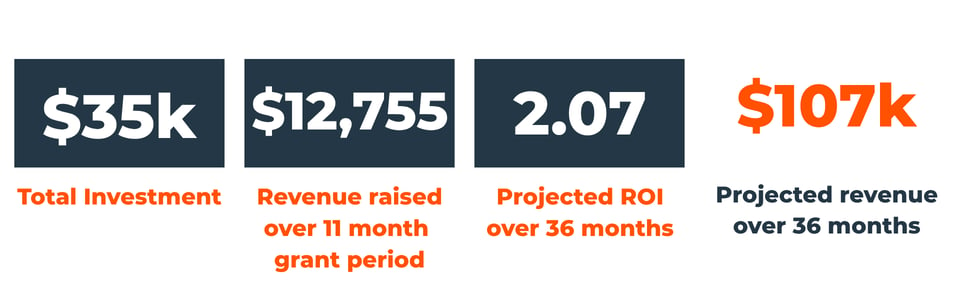
Through this experiment, CLRJ institutionalized their training program by creating an archive of general trainings and expanding their trainer capacity through a train-the-trainer approach that enabled program staff who had never delivered trainings to lead sessions independently.
A major milestone came with the development of Spanish-language offerings using professional translations that also served as study guides for new trainers, while audience-specific promotional materials launched a grassroots fundraising initiative that deepened relationships with donors and community members outside their core programmatic areas in Los Angeles and San Diego.
Originally motivated by the aftermath of the Supreme Court's Dobbs decision overturning Roe v. Wade, when reproductive justice issues gained increased urgency, the systematized approach allowed CLRJ to be proactive rather than reactive, generating predictable revenue while building sustainable infrastructure for knowledge transfer.
This model represents a pathway toward financial autonomy that allows them to invest in organizational priorities often neglected due to restrictions accompanying traditional funding sources.